
5 Hands-On Science Lessons Every Elementary Teacher Can Use Tomorrow
- Kim Woodford

- Dec 13
- 3 min read
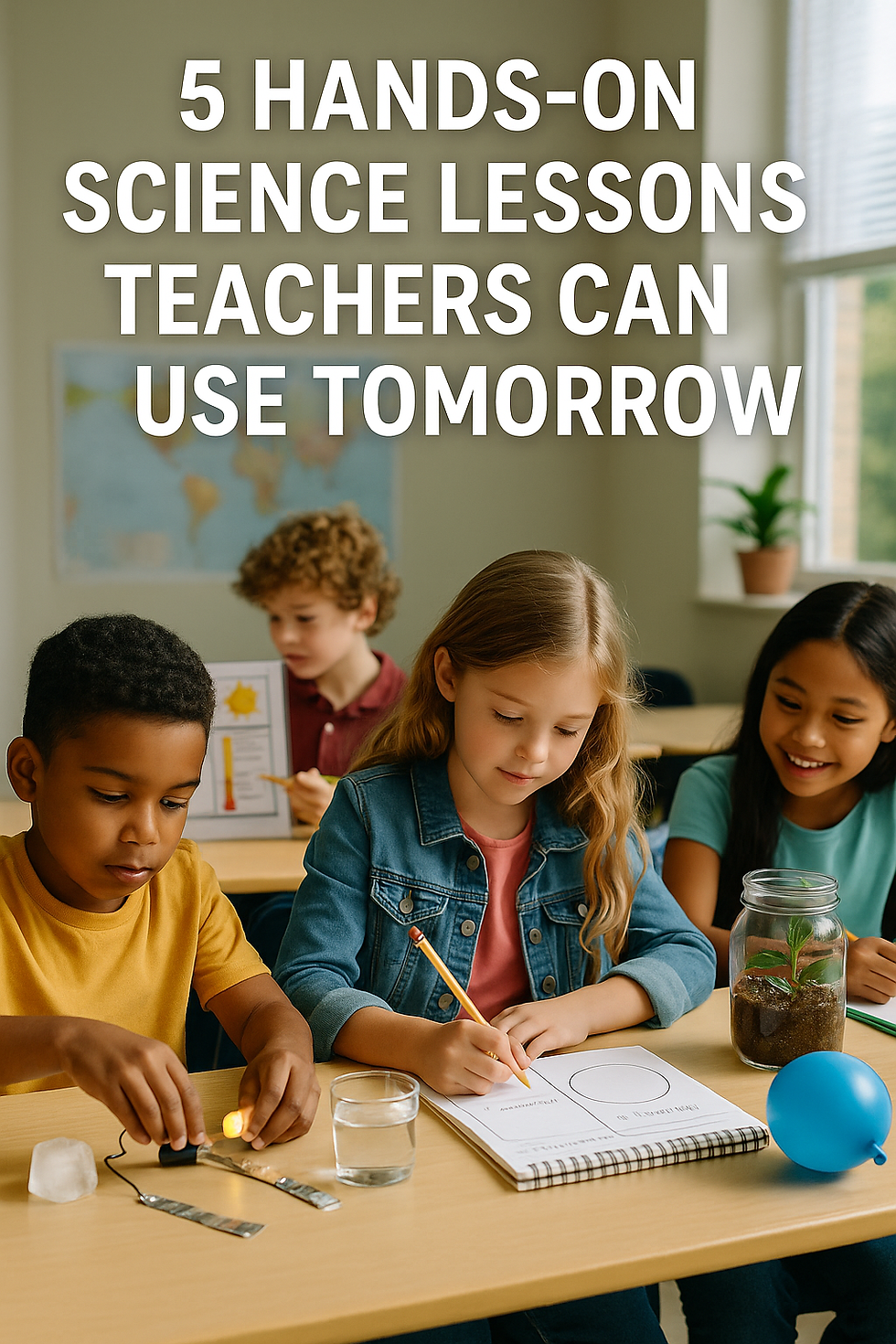
1. States of Matter: Real-World Investigation Lab

Grade Band: K–5 (easily scaffolded)
Core Concept: Matter has observable properties that determine its state.
Learning Objective
Students will observe, compare, and classify solids, liquids, and gases based on their physical properties.
Materials
Ice cubes (in a bowl)
Water in a clear cup
Balloons filled with air
Variety of solids (rock, spoon, eraser, sponge)
Observation recording sheet or science journal
Lesson Procedure
Engage: Display all materials. Ask: “Which of these can change shape? Which cannot?”
Explore: Students rotate through stations, touching, observing, and describing each item.
Explain: Students sort objects into solid, liquid, or gas categories and justify their choices.
Elaborate: Allow ice to melt and discuss physical change.
Evaluate: Students write or draw how they know the state of matter for one object.
Higher-Order Questions
How can an object change states but still be the same substance?
What properties help us classify matter?
Assessment
Observation chart
Exit ticket: Describe one property of a liquid.
Extension
Investigate freezing or evaporation over time
Connect to real-world examples (food, weather, materials)
2. Simple Circuits: Engineering Through Trial & Error
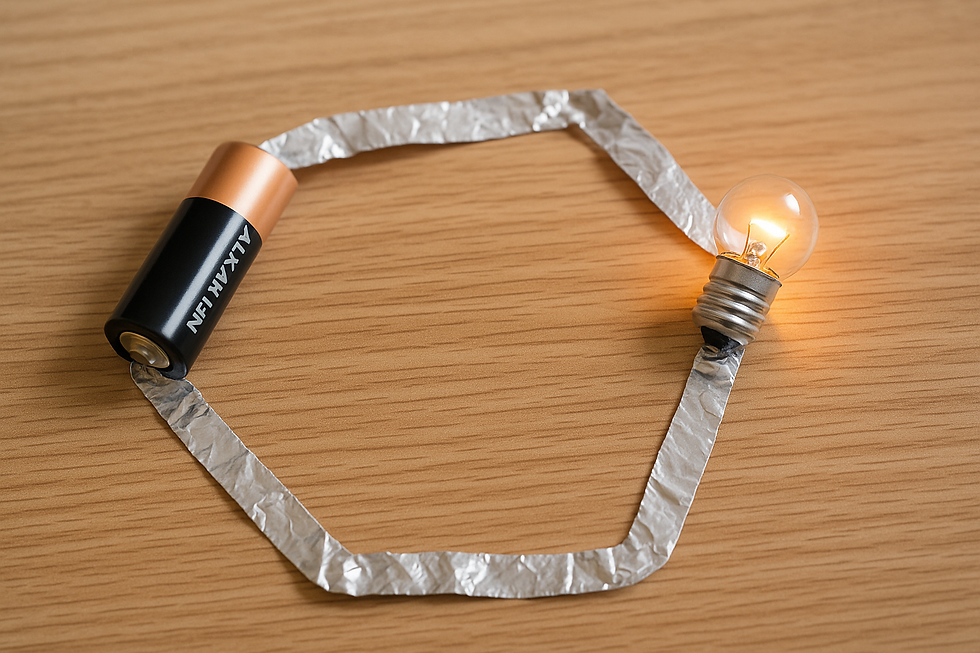
Grade Band: 2–5
Core Concept: Electrical energy flows through a closed circuit.
Learning Objective
Students will design and test simple circuits and explain how energy flows.
Materials
AA batteries
Aluminum foil strips or wires
Small light bulbs or LEDs
Tape
Circuit recording sheet
Lesson Procedure
Engage: Show a flashlight and ask: “How does this work?”
Explore: Students attempt to light a bulb using provided materials.
Explain: Discuss why some designs worked and others did not.
Elaborate: Students redesign their circuit to improve efficiency.
Evaluate: Students label a drawing of a working circuit.
Higher-Order Questions
Why must the circuit be closed?
What happens when energy flow is interrupted?
Assessment
Circuit diagram
Oral explanation or written reflection
Extension
Add a switch
Compare series vs. parallel circuits (upper grades)
3. Weather Watchers: Scientists Track Patterns

Grade Band: K–5
Core Concept: Weather can be observed, measured, and recorded over time.
Learning Objective
Students will collect and analyze daily weather data to identify patterns.
Materials
Thermometer
Wind sock (paper/ribbon)
Weather symbols
Daily weather journal
Lesson Procedure
Engage: Ask: “How does weather affect what we wear or do?”
Explore: Students observe outdoor conditions daily.
Explain: Discuss weather vocabulary and tools.
Elaborate: Graph weekly weather data.
Evaluate: Students describe a weather pattern they observed.
Higher-Order Questions
How does weather change over time?
Why is weather prediction important?
Assessment
Weather journal entries
Simple graphs
Extension
Compare local weather to another city
Introduce climate vs. weather
4. Mini Ecosystem: Living Systems in Action
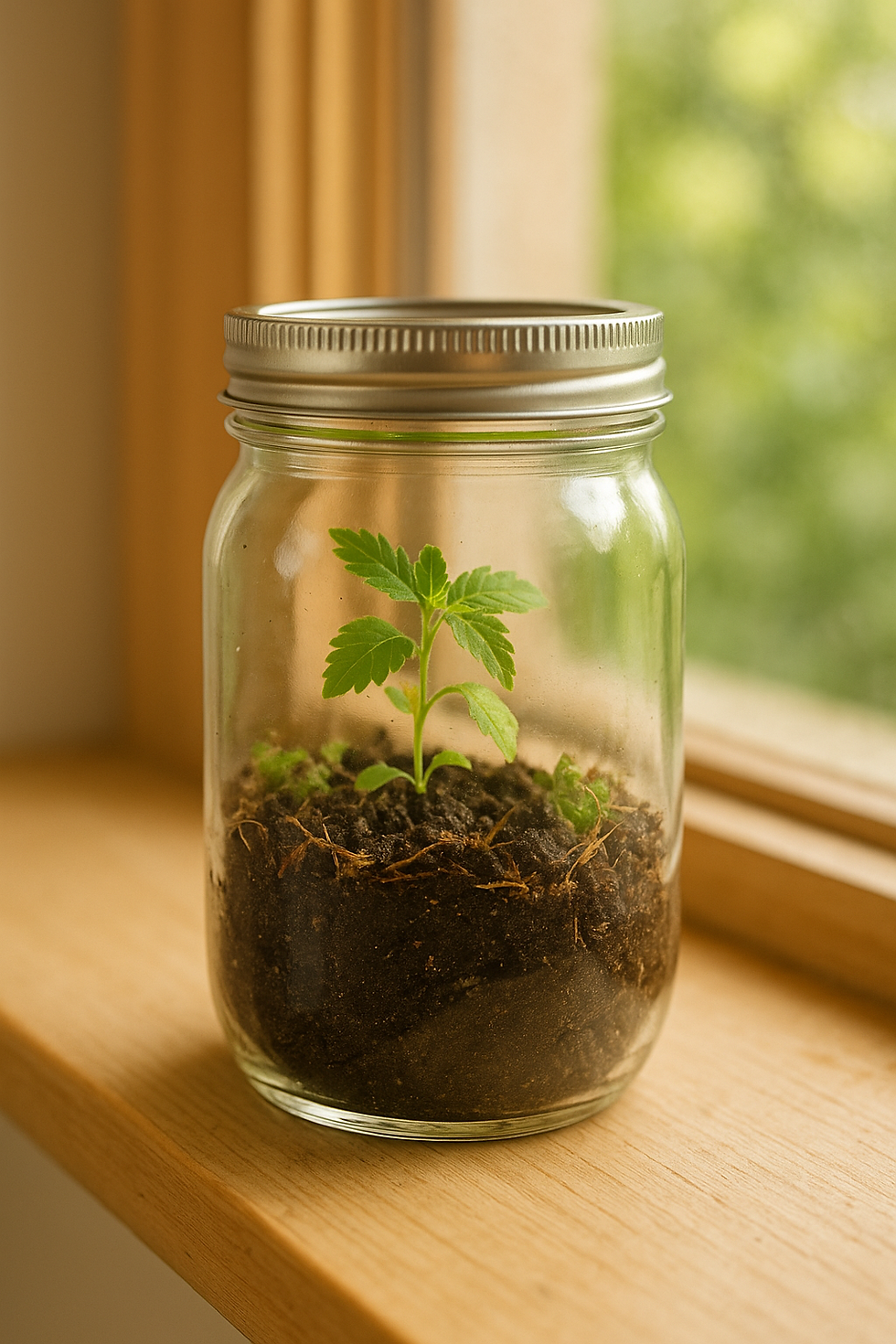
Grade Band: 1–5
Core Concept: Living organisms interact with their environment.
Learning Objective
Students will model an ecosystem and explain how living and nonliving components interact.
Materials
Clear plastic bag or jar
Soil
Small plant or grass
Water
Sunlight
Lesson Procedure
Engage: Ask: “What do plants need to survive?”
Explore: Students build their ecosystem.
Explain: Identify biotic and abiotic components.
Elaborate: Observe changes over days or weeks.
Evaluate: Students explain what happens if one part is removed.
Higher-Order Questions
How do living things depend on nonliving things?
How is this system similar to Earth?
Assessment
Observation log
Diagram of ecosystem
Extension
Add decomposers (upper grades)
Compare ecosystems (desert, forest, ocean)
5. Inquiry Science Journaling: Thinking Like a Scientist

Grade Band: K–5
Core Concept: Scientists record observations, ask questions, and reflect.
Learning Objective
Students will document scientific thinking using words, pictures, and data.
Materials
Science journal or printable pages
Pencils, crayons, rulers
Lesson Procedure
Engage: Show real scientist notebooks.
Explore: Students journal during investigations.
Explain: Model strong observation vs. opinion.
Elaborate: Add diagrams, labels, and data tables.
Evaluate: Students reflect on learning.
Sentence Stems
I observed…
I wonder…
I learned…
Assessment
Journal rubric
Student reflection
Extension
Peer feedback
Cross-curricular writing connections
Closing
Robust science lessons don’t mean complicated lessons—they mean purposeful structure, strong questioning, and time for curiosity. These lessons grow with your students and work beautifully with science journals and outdoor learning experiences.


Comments